
 Definity Pest Services · DFW
Stinging wasps around DFW homes are mainly paper wasps and red wasps (Polistes), which build open umbrella-shaped nests under eaves and in structures, and yellowjackets (Vespula), which build large hidden nests in voids and the ground. Unlike bees, they can sting repeatedly. Control means treating and removing nests safely and sealing the structural gaps where they build — best left to a professional for large or hidden nests.
Quick reference
Identification
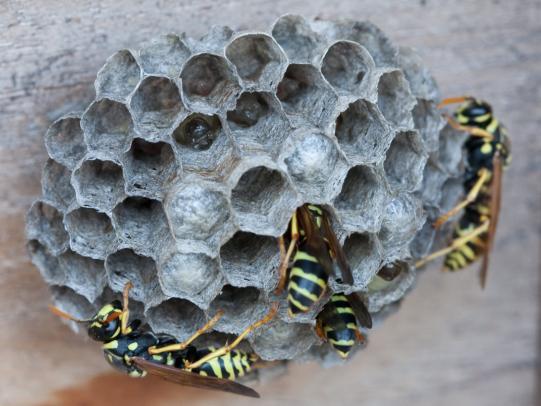
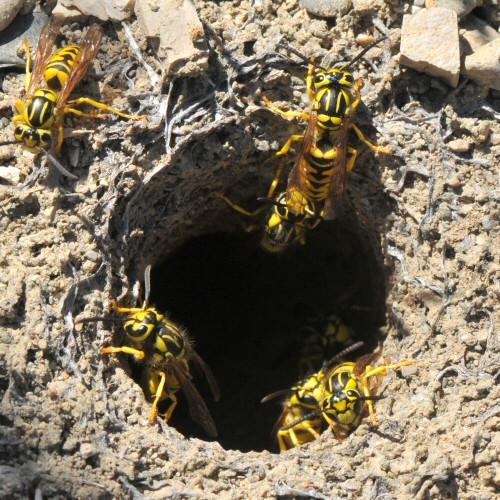
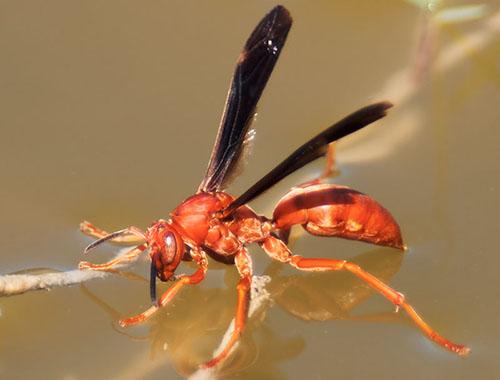
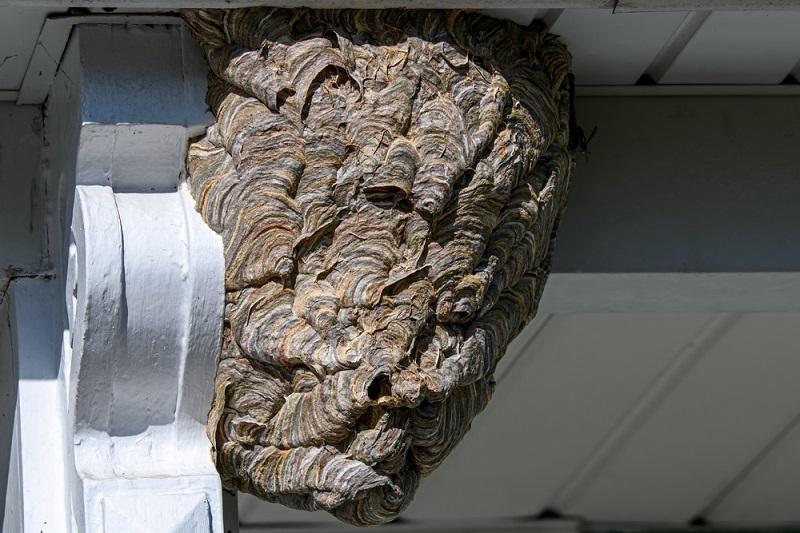
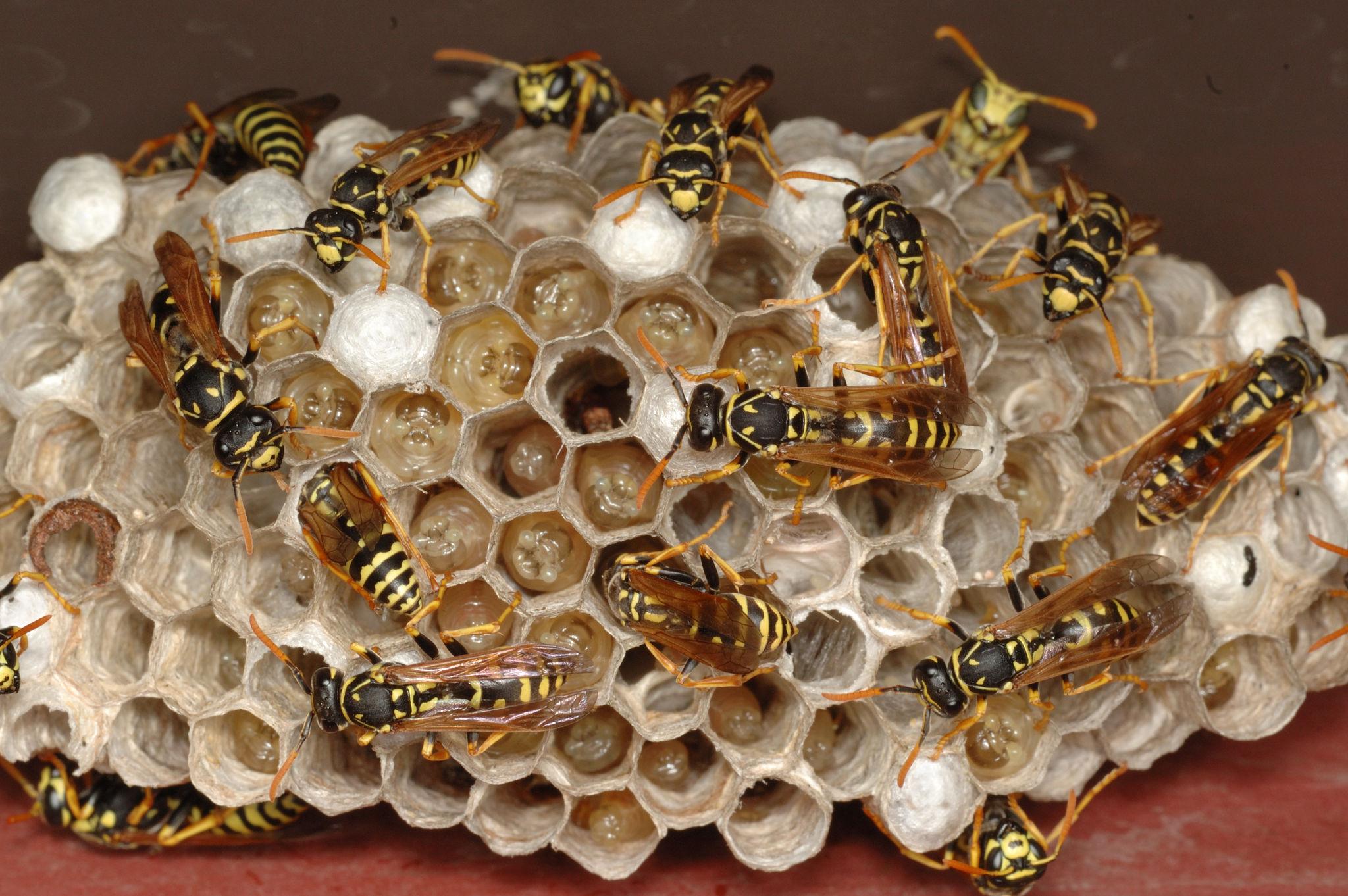
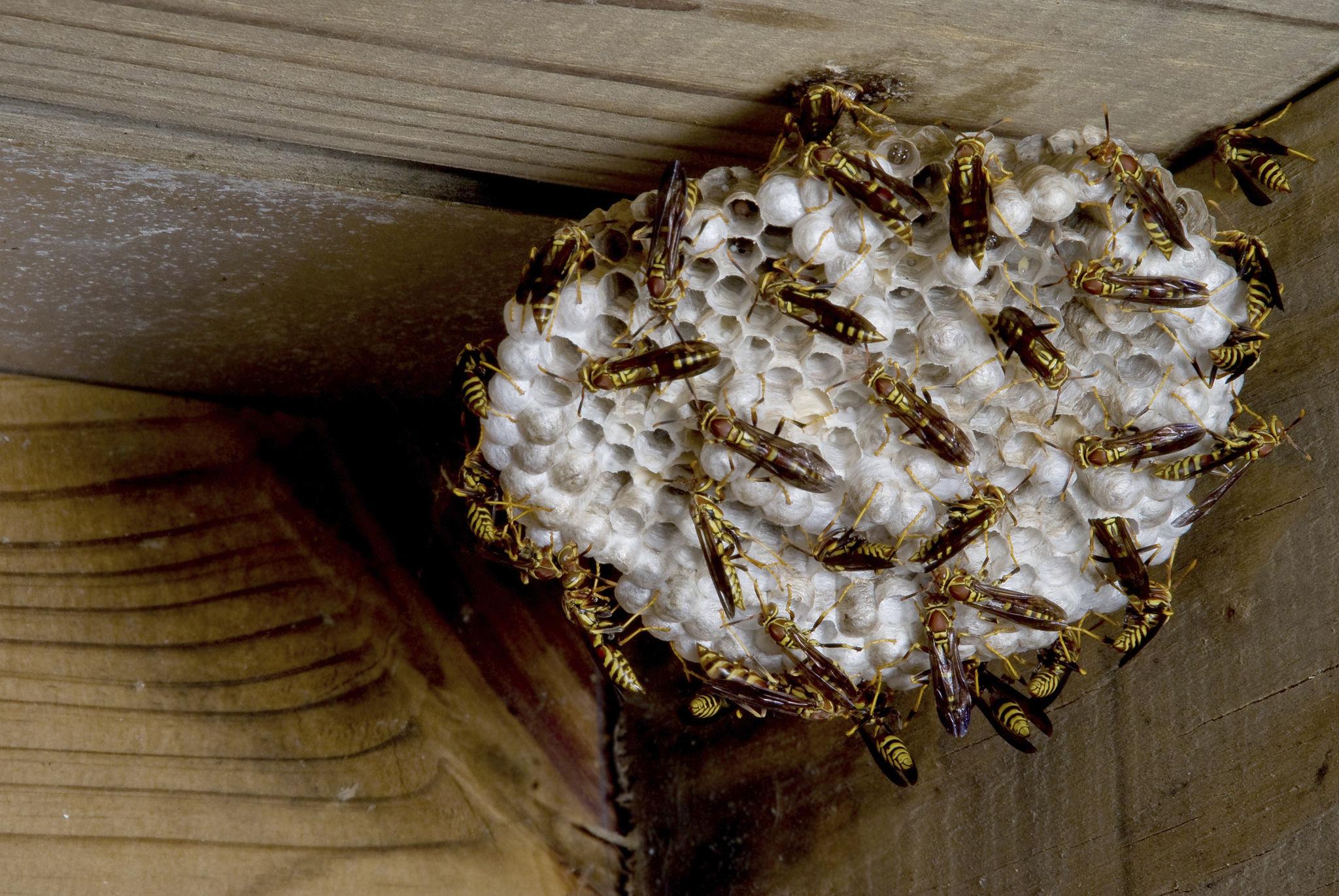
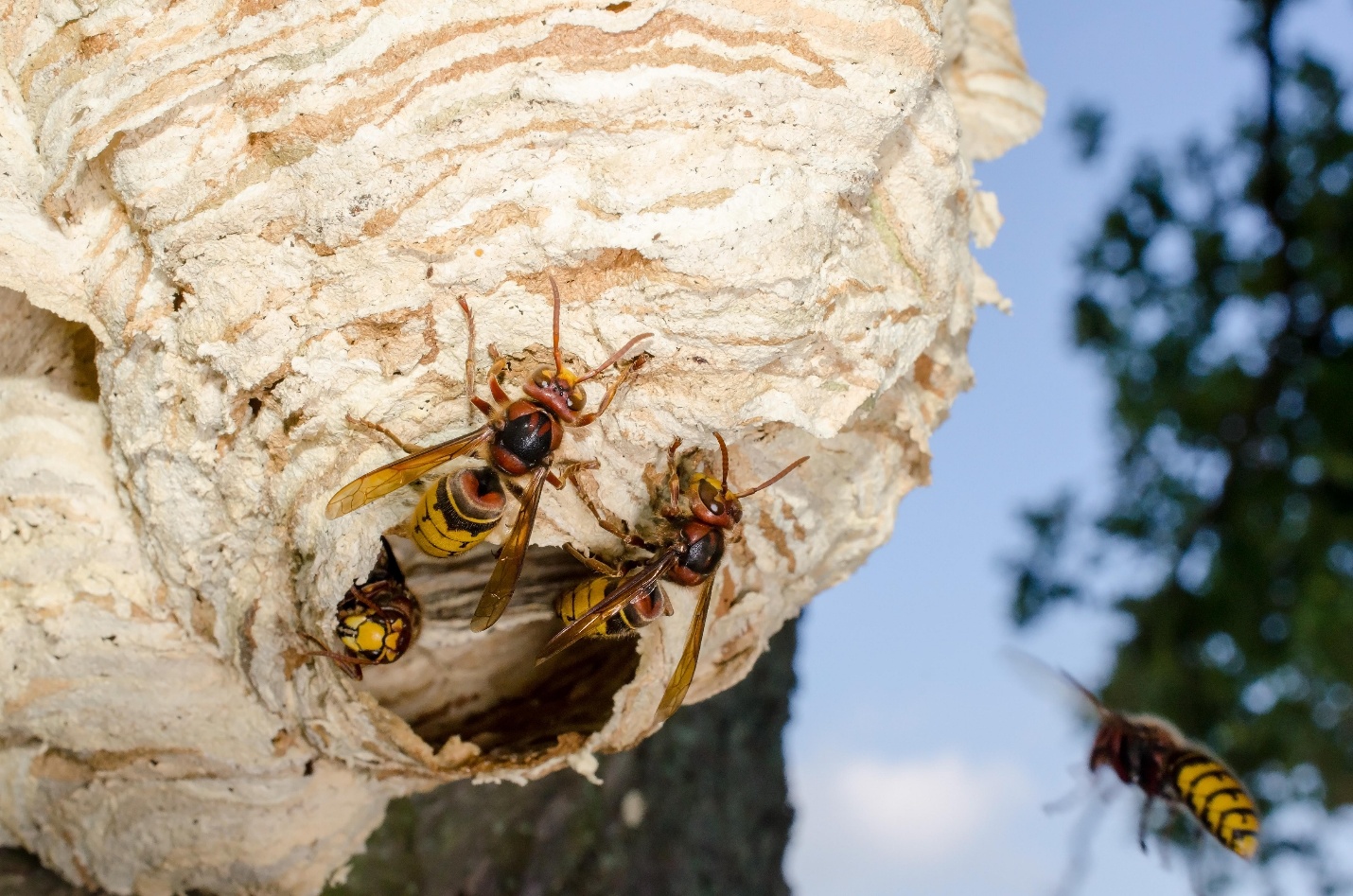
Paper wasps and red wasps are slender with long legs that dangle in flight and build open, exposed, umbrella-shaped combs under eaves, in soffits, grills, and play equipment; red wasps are a reddish-brown Texas favorite for porches and overhangs. Yellowjackets are stockier, boldly black-and-yellow, faster, and more aggressive, nesting out of sight in wall voids, attics, and underground — so you see a steady stream of wasps entering one spot rather than a visible comb.
Where it's found
- Under eaves and soffits
- Grills and play equipment
- Wall voids and attics
- Underground burrows
- Porches and overhangs
Risk level
- Stings repeatedly
- Sting can be a medical emergency for allergic people
- Hidden yellowjacket nests are especially hazardous
Signs of activity
- Open umbrella-shaped combs under eaves
- A steady stream of wasps entering one spot in a wall or ground
- Increased aggressive scavenging in late summer and fall
How Definity treats it
- Treat the nest at its source with protective methods
- Remove accessible nests
- Seal the eaves, soffits, and structural voids where wasps build
- Use a protective approach for hidden or aggressive yellowjacket colonies
How to identify wasps and hornets
Paper wasps and red wasps are slender with long legs that dangle in flight and build open, exposed, umbrella-shaped combs under eaves, in soffits, grills, and play equipment; red wasps are a reddish-brown Texas favorite for porches and overhangs. Yellowjackets are stockier, boldly black-and-yellow, faster, and more aggressive, nesting out of sight in wall voids, attics, and underground — so you see a steady stream of wasps entering one spot rather than a visible comb.
Behavior & biology
These are social wasps: a queen starts a nest in spring and the colony grows through summer, peaking in late summer and fall when it's largest and most defensive. Paper and red wasp nests stay relatively small and visible; yellowjacket colonies can grow to thousands of workers hidden in a void or burrow. As food sources shift in fall, yellowjackets in particular become more aggressive scavengers around people and trash.
Why wasps and hornets matter
The primary threat is stinging. Social wasps defend their nests vigorously and can sting repeatedly, and for people with venom allergies a sting can be a medical emergency. Yellowjackets are especially hazardous because their nests are hidden — a mower, trimmer, or footstep near a ground or void nest can trigger a mass defensive response. Nests in wall voids and attics can also stain surfaces and attract secondary pests.
DIY vs. professional control
Knocking down a small, easily reached paper wasp nest may be manageable, but hidden yellowjacket nests and large or high nests are dangerous to disturb and prone to triggering mass stinging. Professional control treats the nest at the source, removes accessible nests, and seals the eaves, soffits, and voids where wasps establish, with the protective equipment and approach to do it safely.
How Definity treats wasps and hornets
Definity handles wasps and hornets by treating the nest at its source, removing accessible nests, and sealing the eaves, soffits, and structural voids where they build, using protective methods for hidden or aggressive yellowjacket colonies. Johnny Lockridge's rule of thumb: a small paper wasp nest you can reach is one thing, but a stream of wasps disappearing into a wall or the ground means a hidden colony — don't disturb it, call a pro.
Fast facts
- Unlike honey bees, social wasps such as paper wasps, red wasps, and yellowjackets can sting repeatedly, and they defend their nests aggressively when disturbed.
- Yellowjacket colonies often nest hidden in wall voids, attics, or the ground and can grow to thousands of workers, making accidental disturbance with a mower or trimmer especially dangerous.
Visual ID
What wasps and hornets look like
Real reference photos to help you identify wasps and hornets before they become a bigger problem.
How we treat it
Barrier Treatment
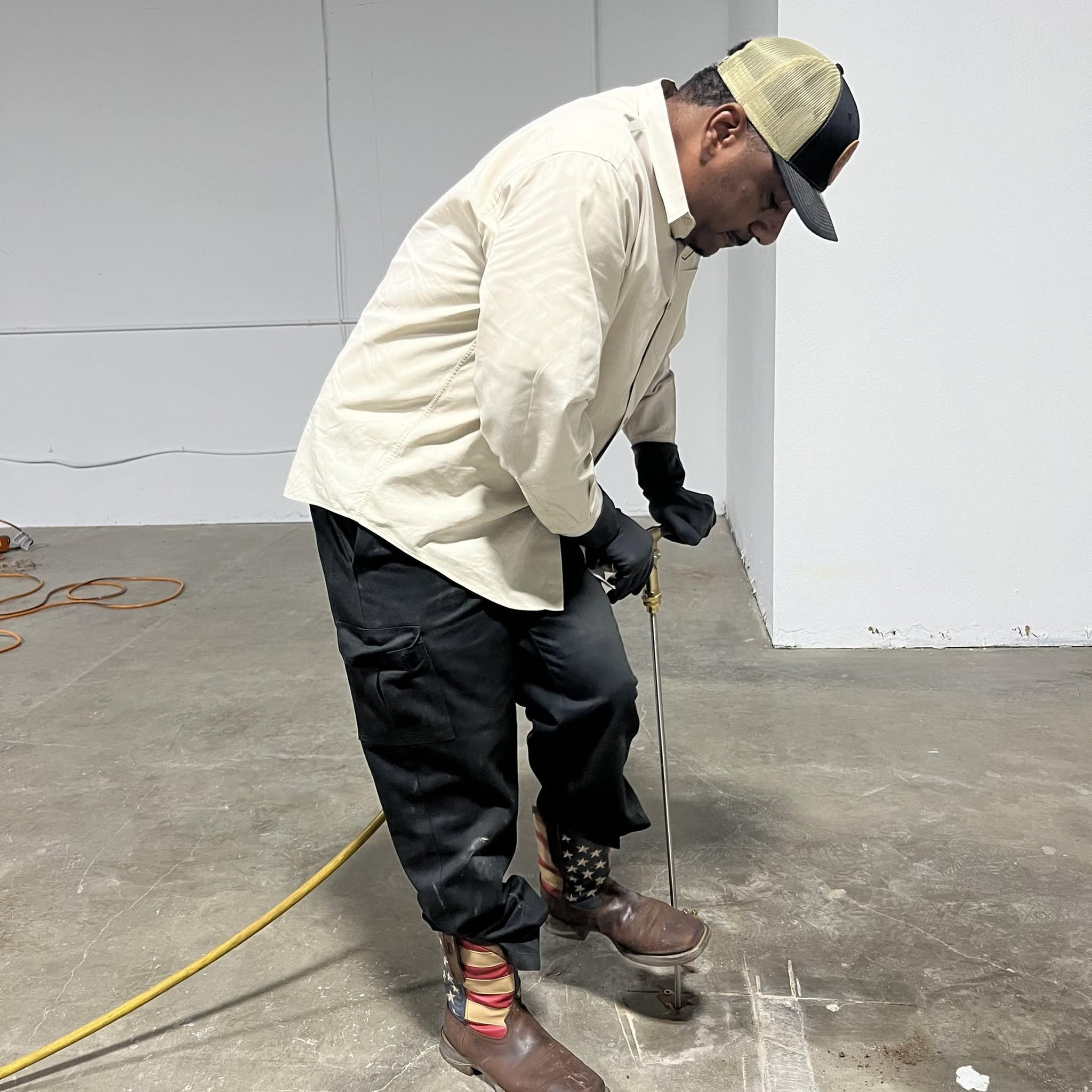
Applying a targeted barrier treatment to stop pests at the perimeter, before they ever get inside.
Questions, answered
Wasps and Hornets FAQ
What's the difference between paper wasps and yellowjackets?
Paper and red wasps build open, umbrella-shaped nests you can see under eaves and have a slender, dangling-legged look. Yellowjackets are stockier and more aggressive and nest hidden in voids or the ground, so you see them streaming into one spot rather than a visible comb.
Is it safe to remove a wasp nest myself?
A small, reachable paper wasp nest may be manageable with caution, but hidden, high, or large nests — especially yellowjackets in a void or the ground — can trigger mass stinging and are best left to a professional with the right equipment.
Get help with wasps and hornets: General Pest Control

Texas-proud · Family-owned · Licensed
Got Wasps and Hornets? We solve it.
Definity Pest Services treats Wasps and Hornets for homes and businesses across the DFW Metroplex — licensed, insured, and guaranteed.
Get your free quote
Tell us what you're seeing. Johnny Lockridge or a Definity tech will call you back fast — usually same day.
Prefer to talk now? Call 469-471-6798.
- Free, no-pressure estimate
- Licensed & insured Texas operator
- Commercial & residential