
 Definity Pest Services · DFW
The striped bark scorpion (Centruroides vittatus) is the most common scorpion in Texas. It's a tan scorpion with two dark stripes down its back that hides under rocks, bark, and clutter outdoors and slips indoors through gaps to escape heat. Its sting is painful but rarely dangerous to healthy adults. Control combines exterior treatment, exclusion, and harborage reduction.
Quick reference
Identification
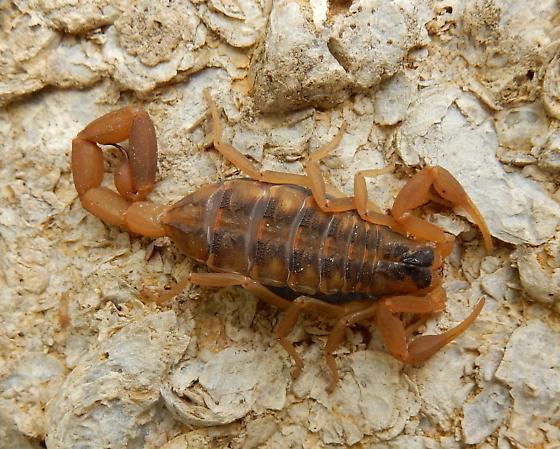
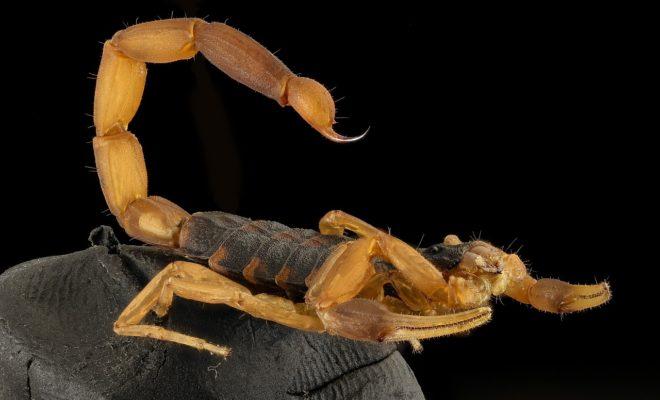
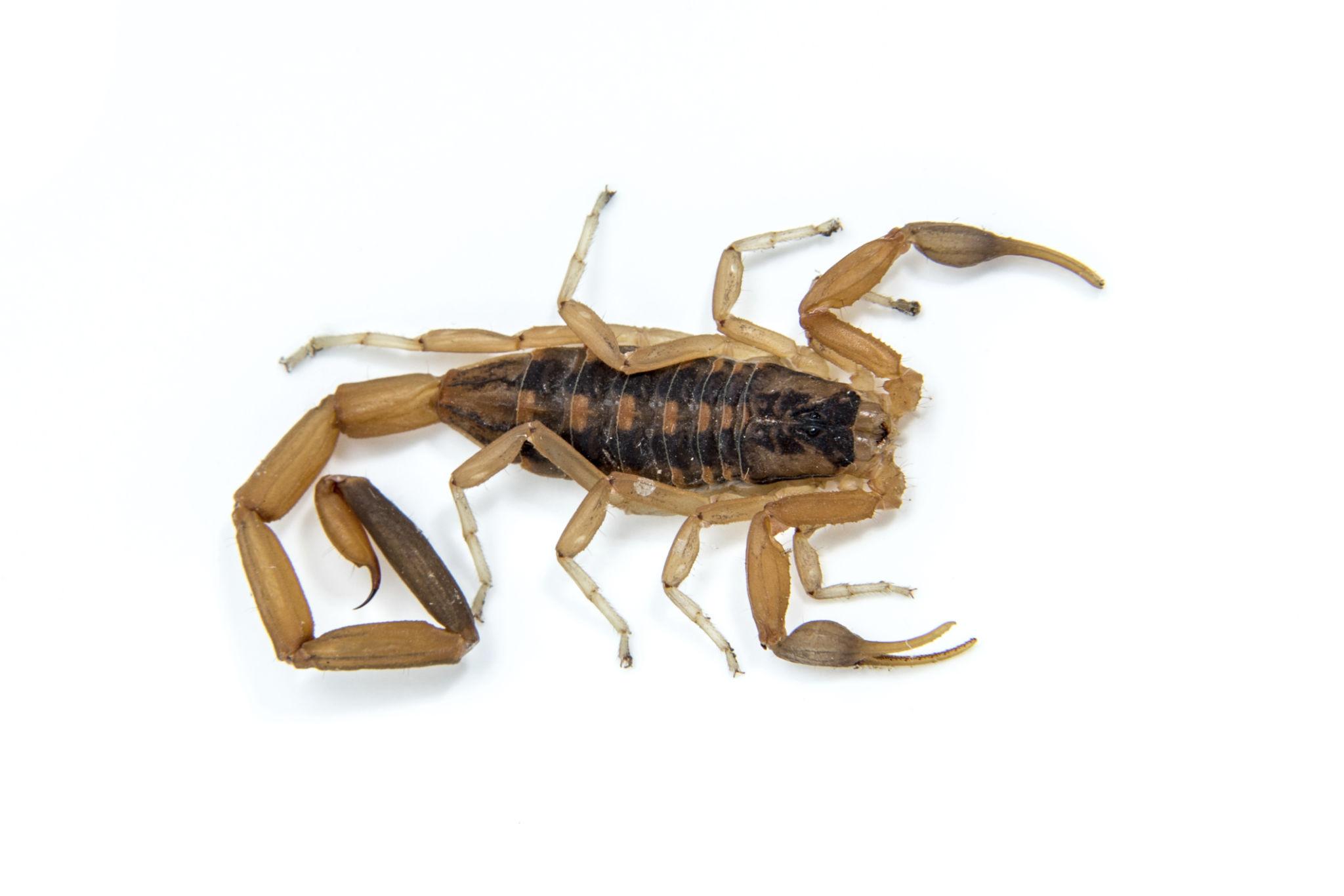
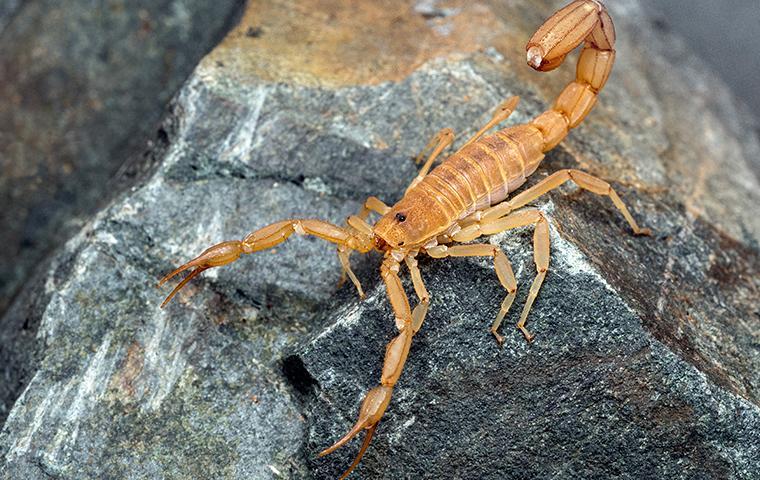
Slender and tan to yellowish, about 2 to 2.5 inches long, with two lengthwise dark stripes on the back and slender pincers. Unlike bulkier desert species, the striped bark scorpion is a climber — it can scale walls and ceilings and is often found above ground level. It glows blue-green under UV (blacklight), which is how professionals locate them at night.
Where it's found
- Rock piles
- Garages
- Crawl spaces
- Under bark, logs, and mulch
- Attics and wall voids
Risk level
- Painful stings
- Medical attention recommended for severe reactions
- Accidental stings from shoes, towels, and bedding
Signs of activity
- Scorpions glowing blue-green under UV blacklight at night
- Sightings on walls, ceilings, and upper floors
- Found tucked into shoes, towels, and clothing
How Definity treats it
- Treat the exterior perimeter and harborage areas
- Seal entry points around the foundation and utility penetrations
- Treat attic and wall voids where they shelter
- Use nighttime blacklight inspection to locate and target activity
How to identify scorpions
Slender and tan to yellowish, about 2 to 2.5 inches long, with two lengthwise dark stripes on the back and slender pincers. Unlike bulkier desert species, the striped bark scorpion is a climber — it can scale walls and ceilings and is often found above ground level. It glows blue-green under UV (blacklight), which is how professionals locate them at night.
Behavior & biology
Striped bark scorpions shelter by day under rocks, logs, bark, mulch, and debris, and in the cool voids of homes — attics, wall voids, closets, and bathrooms. They hunt insects at night and are drawn indoors by prey and by temperature extremes during DFW's hot summers and cold snaps. They're long-lived and reproduce slowly compared to insects, with females carrying young on their backs after birth.
Why scorpions matter
The striped bark scorpion's sting is painful — comparable to a wasp sting — with localized pain, swelling, and numbness, but it is not considered life-threatening to healthy adults. The concern is accidental stings: they tuck into shoes, towels, bedding, and clothing, so people are most often stung when dressing, reaching, or stepping without looking. Children and those with allergies warrant extra caution.
DIY vs. professional control
Indoor sprays do little against a pest that's entering from outside and hiding in voids. Effective control is layered: treating the exterior perimeter and harborage, reducing mulch, rock, and debris near the foundation, sealing entry points, and treating attic and wall voids. Nighttime blacklight inspection helps locate activity that's invisible by day.
How Definity treats scorpions
Definity controls scorpions with exterior perimeter and harborage treatment, sealing of entry points around the foundation and utility penetrations, void treatment, and recommendations to reduce mulch and debris against the home. Johnny Lockridge uses a blacklight to find scorpions after dark, since they fluoresce — it's the difference between guessing where they are and treating exactly where they harbor.
Fast facts
- Scorpions glow blue-green under ultraviolet light, so a blacklight inspection at night is the most reliable way to locate them around a home.
- The striped bark scorpion is a climber and can be found on walls, ceilings, and upper floors — not just at ground level like bulkier desert species.
Visual ID
What scorpions look like
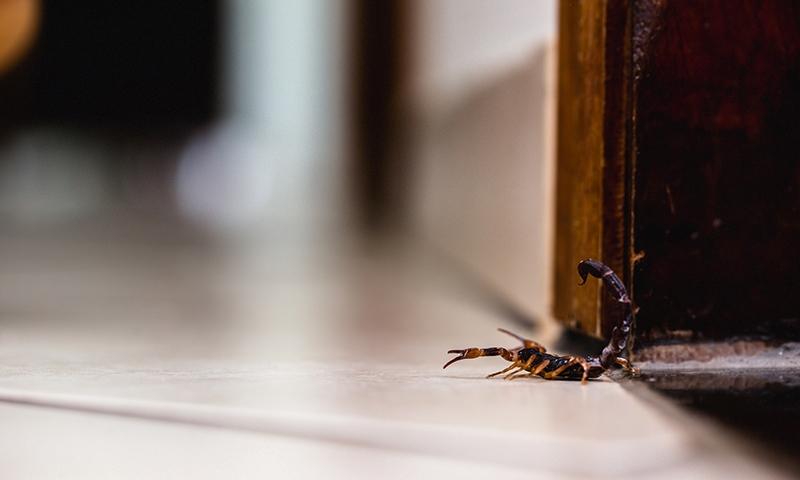
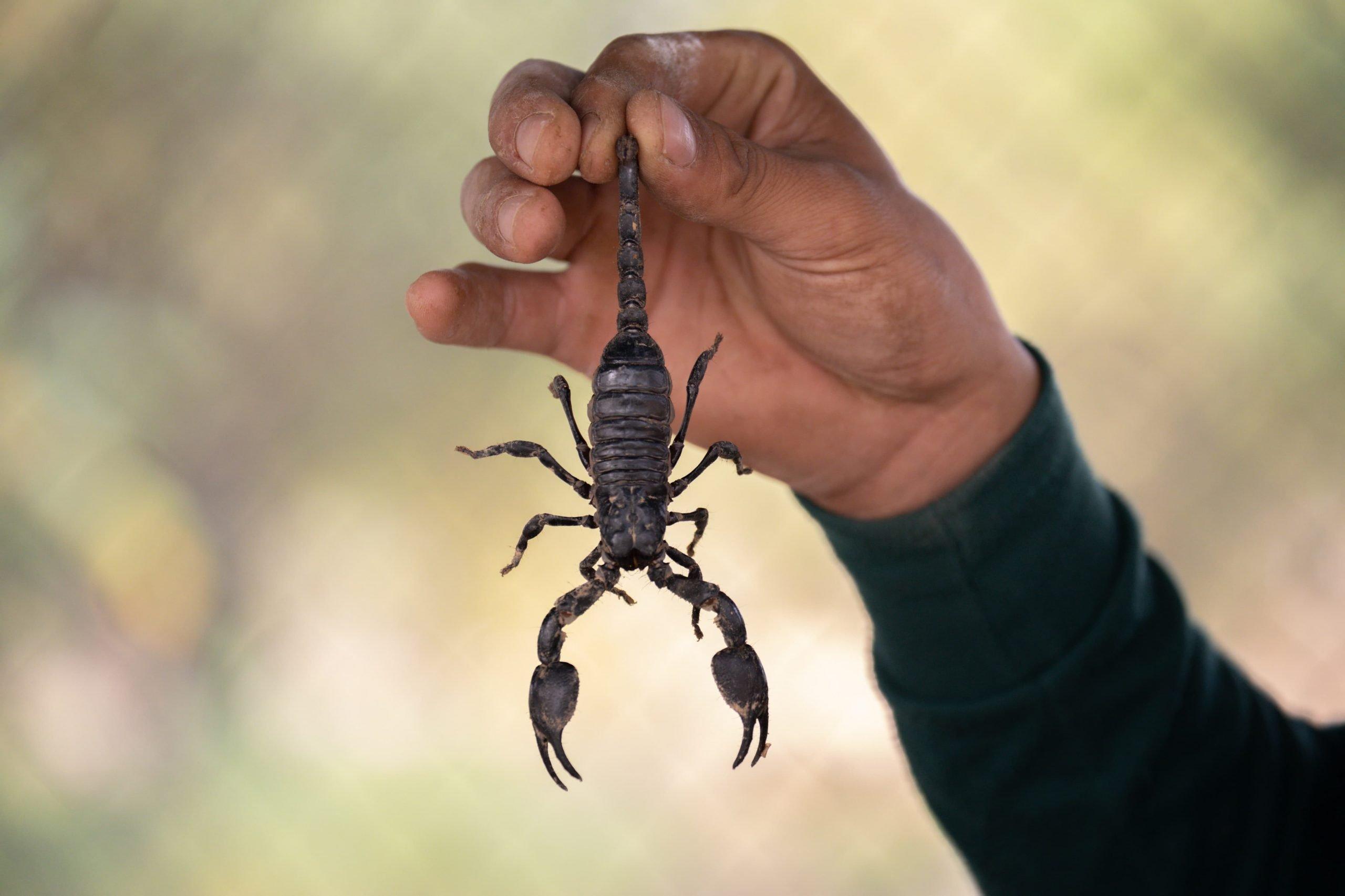
Real reference photos to help you identify scorpions before they become a bigger problem.
How we treat it
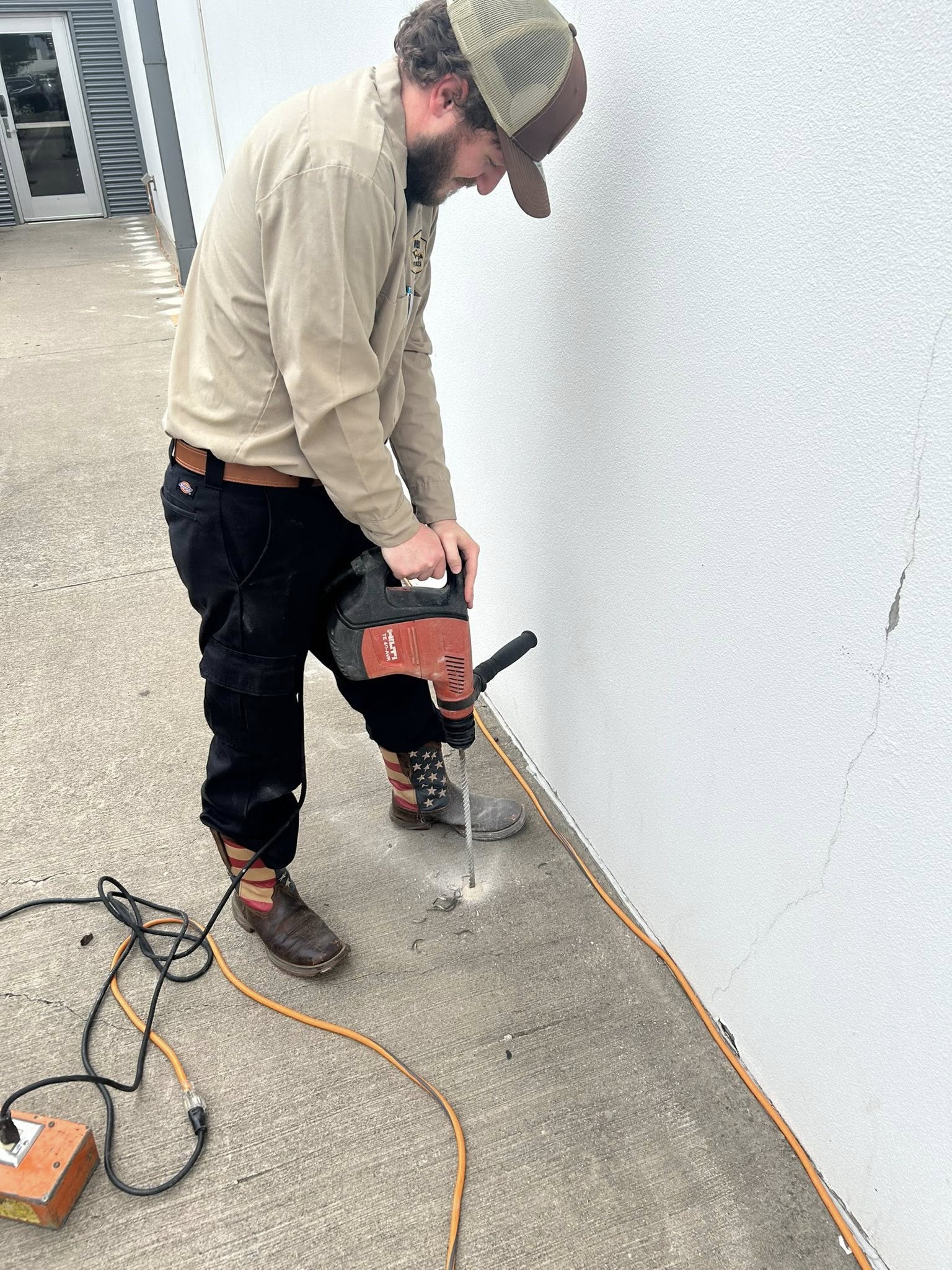
Soil Barrier Treatment
Drilling to place a protective barrier in the soil around the foundation — stopping termites and ants before they reach the structure.
Questions, answered
Scorpions FAQ
Is a Texas scorpion sting dangerous?
The striped bark scorpion's sting is painful — similar to a wasp — with swelling and numbness, but it's not considered life-threatening to healthy adults. Watch children and anyone with allergies closely, and seek care for severe reactions.
Why are scorpions getting into my house?
They come indoors chasing insect prey and escaping summer heat or winter cold, slipping through gaps around doors, pipes, and the foundation. Sealing entry points and reducing mulch and debris near the house makes it far less inviting.
Get help with scorpions: General Pest Control

Texas-proud · Family-owned · Licensed
Got Scorpions? We solve it.
Definity Pest Services treats Scorpions for homes and businesses across the DFW Metroplex — licensed, insured, and guaranteed.
Get your free quote
Tell us what you're seeing. Johnny Lockridge or a Definity tech will call you back fast — usually same day.
Prefer to talk now? Call 469-471-6798.
- Free, no-pressure estimate
- Licensed & insured Texas operator
- Commercial & residential