
 Definity Pest Services · DFW
Carpenter ants (Camponotus species) are large black or reddish ants that excavate galleries inside moist, decaying, or water-damaged wood to build their nests. Unlike termites, they don't eat wood — they tunnel through it, leaving behind sawdust-like shavings. In DFW they're often a symptom of a moisture problem, and control means treating the colony and fixing the source.
Quick reference
Identification
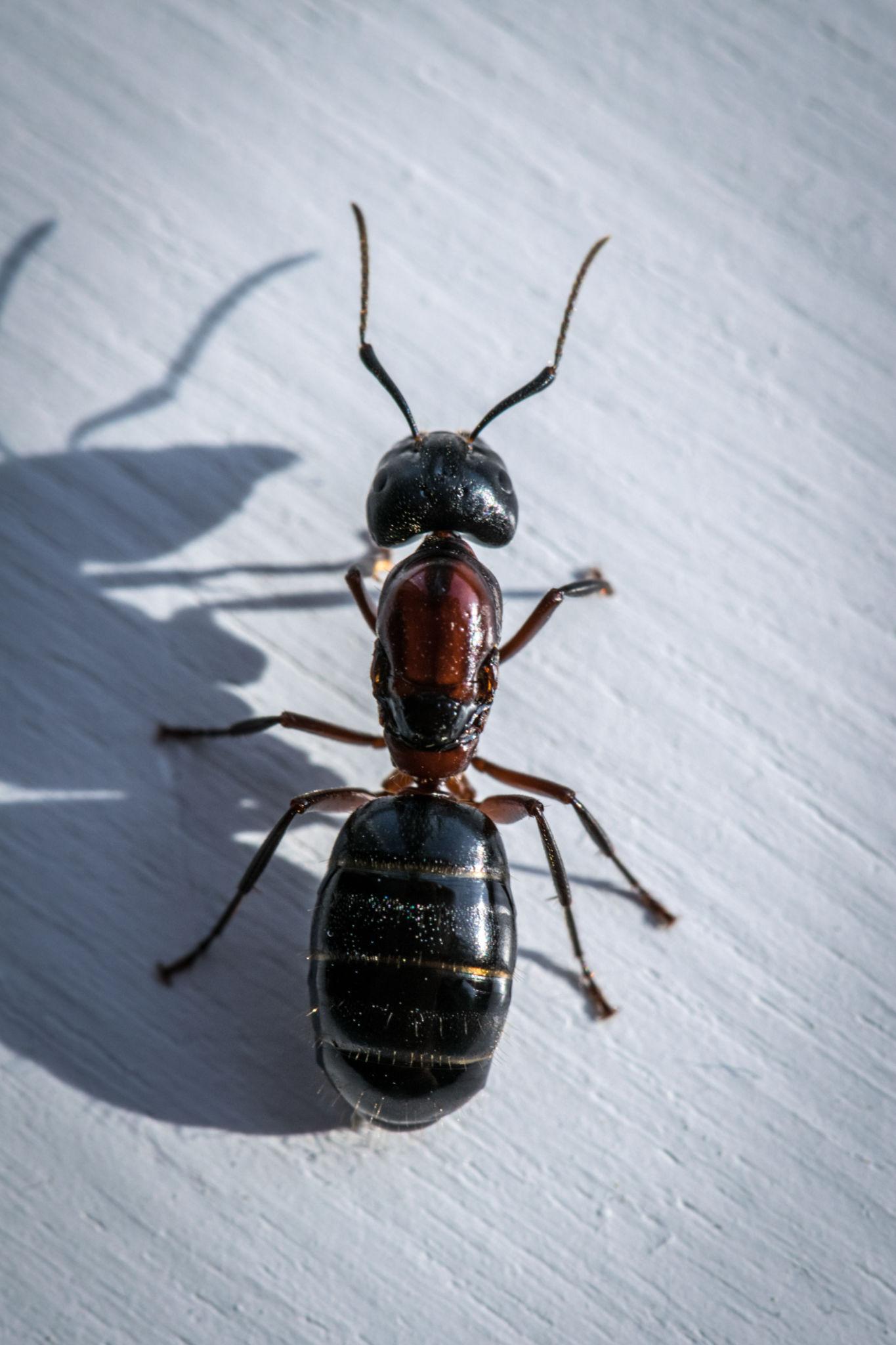
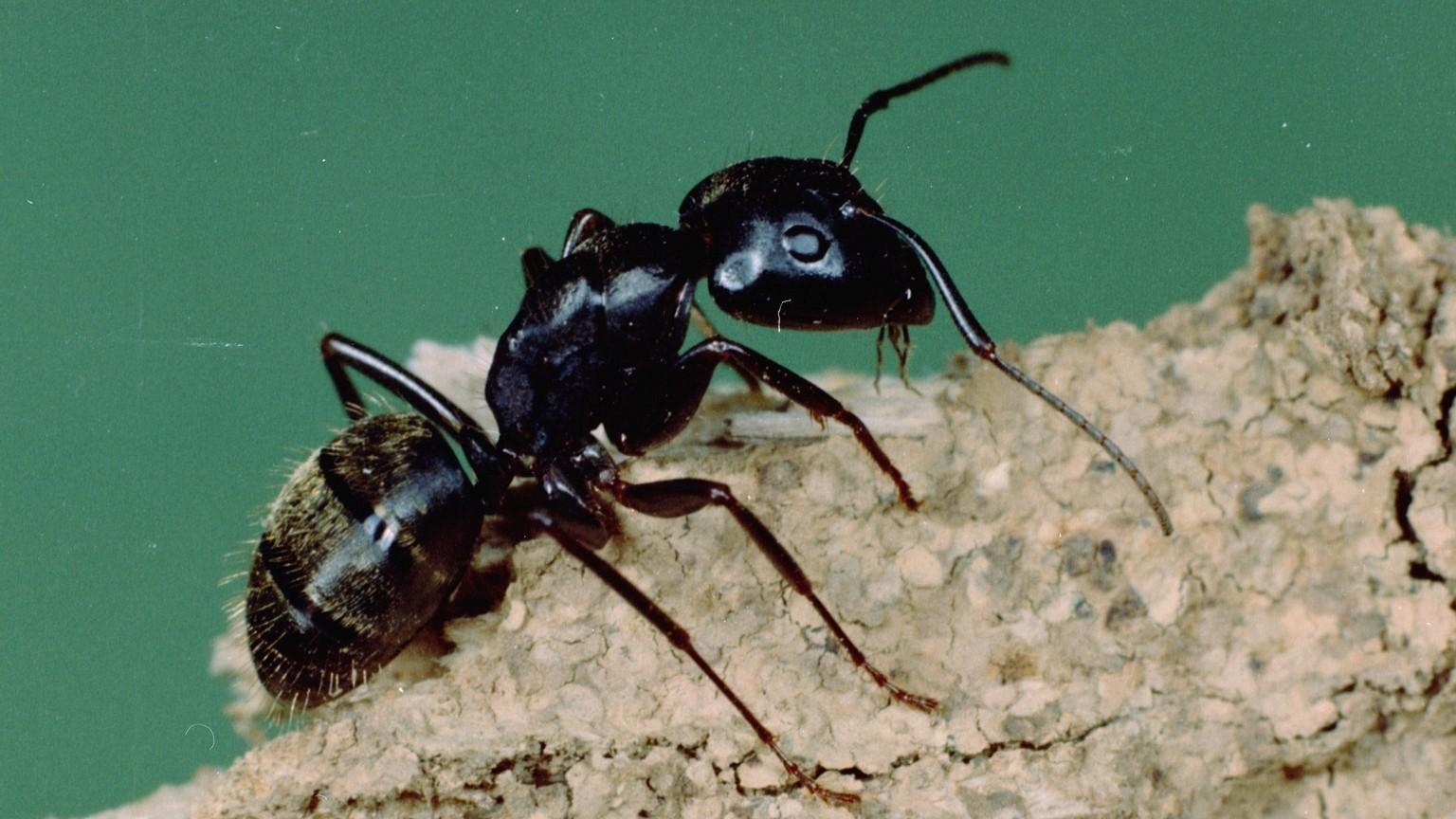
Among the largest ants you'll see indoors, 1/4 to 1/2 inch, usually black or black-and-red, with a single node between thorax and abdomen and a smoothly rounded thorax in profile. The telltale sign is coarse sawdust (frass) — often mixed with insect parts — beneath baseboards, window frames, or door frames, plus large winged swarmers indoors in spring.
Where it's found
- Moist wood
- Attics
- Wall voids
- Tree stumps
- Around leaks and water-damaged framing
Risk level
- Structural damage
- Excavates wood for nesting
- Signals hidden moisture or rot
Signs of activity
- Sawdust-like frass
- Rustling noises inside walls
- Large worker ants indoors
- Winged swarmers indoors in spring
How Definity treats it
- Locate the parent and satellite nests behind the visible activity
- Apply non-repellent products and baits workers carry back to the colony
- Treat harborage in wall voids and around moisture-damaged wood
- Identify and address the moisture or leak feeding the infestation
How to identify carpenter ants
Among the largest ants you'll see indoors, 1/4 to 1/2 inch, usually black or black-and-red, with a single node between thorax and abdomen and a smoothly rounded thorax in profile. The telltale sign is coarse sawdust (frass) — often mixed with insect parts — beneath baseboards, window frames, or door frames, plus large winged swarmers indoors in spring.
Behavior & biology
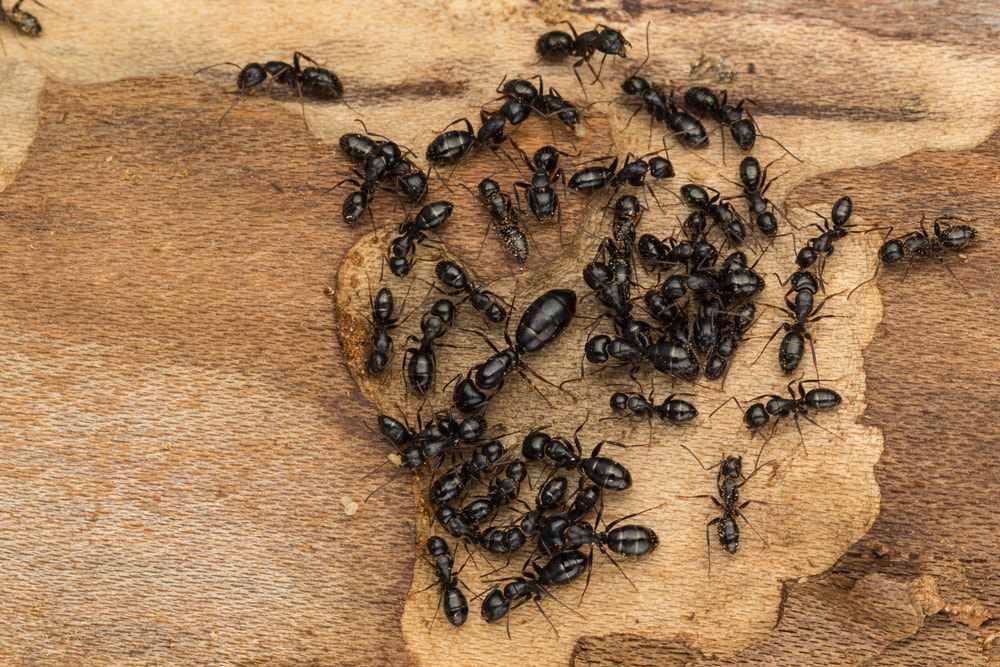
Carpenter ant colonies center on a parent nest in moist wood and often establish satellite nests in drier locations, including wall voids and attics. A mature colony can hold several thousand workers and takes years to develop before producing winged reproductives. They're most active at night, foraging along structural edges and tree limbs that touch the roof.
Why carpenter ants matter
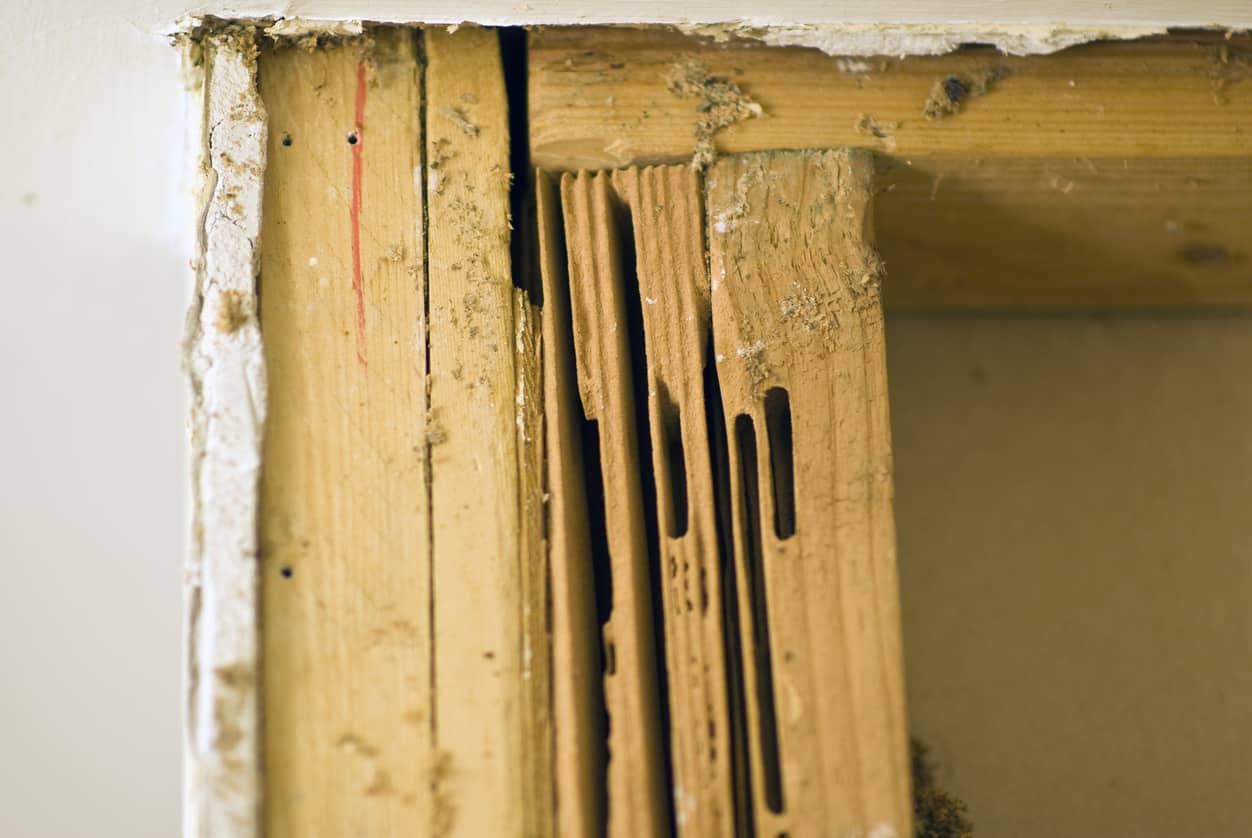
Carpenter ants weaken wood structurally by hollowing out smooth galleries for nesting, particularly in areas already softened by leaks — around tubs, sinks, roof flashing, and window frames. Over time this can compromise framing and trim. Because they target damp wood, an infestation frequently points to a hidden moisture or rot problem that needs correcting alongside the ants.
DIY vs. professional control
Spraying the trails you see kills foragers but leaves the parent and satellite nests producing more, so the colony persists. Carpenter ants also nest in voids that surface sprays never reach. Professional control traces the activity back to the nests, treats with non-repellent products and targeted baits the ants carry home, and identifies the moisture issue feeding the infestation.
How Definity treats carpenter ants
Definity controls carpenter ants by locating the parent and satellite nests, applying non-repellent products and baits the workers carry back to the colony, and treating harborage in wall voids and around moisture-damaged wood. Johnny Lockridge points out that carpenter ants are usually a moisture clue — find the leak or damp wood they're nesting in, fix it, and you remove the reason they chose your home in the first place.
Fast facts
- Carpenter ants do not eat wood — they excavate it for nesting and discard the shavings as frass, which is why you find sawdust-like piles rather than mud tubes.
- A carpenter ant infestation indoors is frequently a sign of hidden moisture or wood rot, since the ants prefer damp, softened wood to start their galleries.
Visual ID
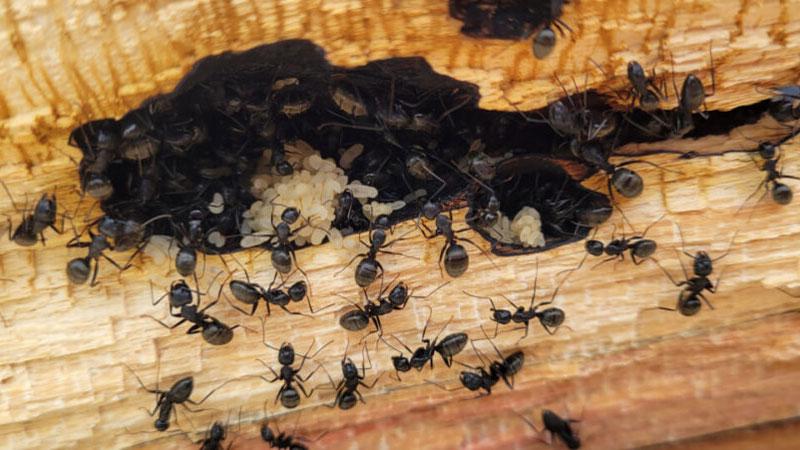
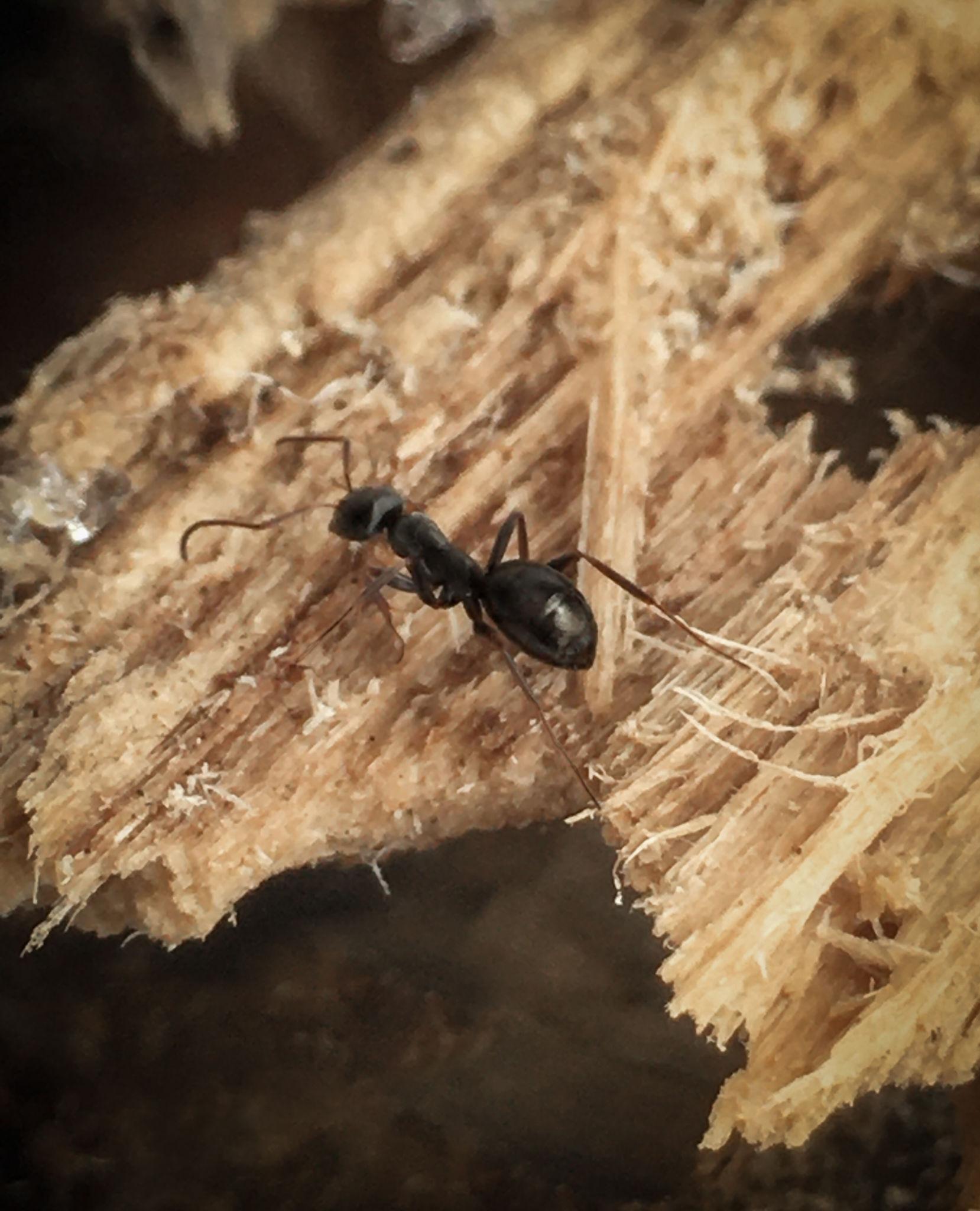
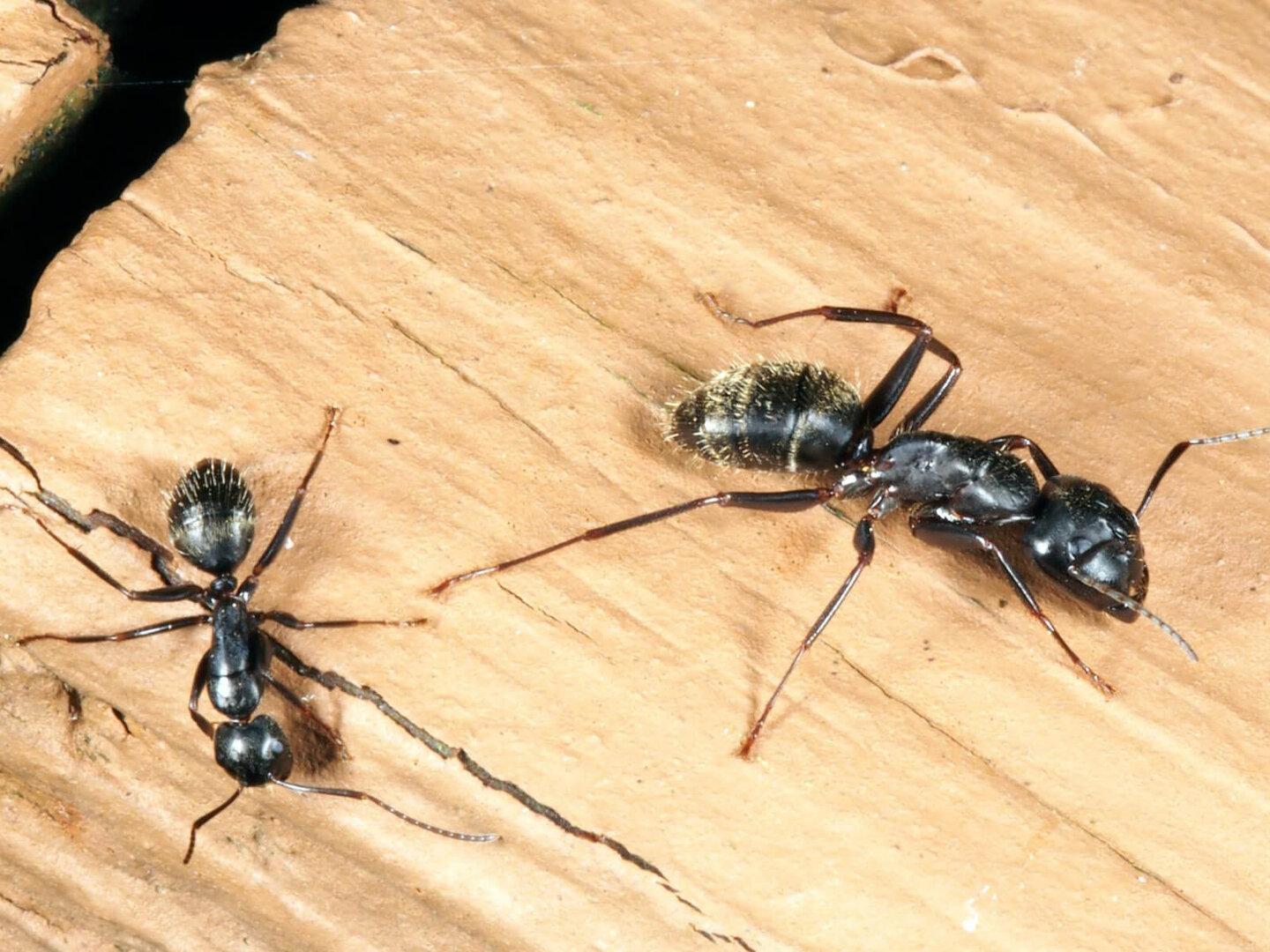
What carpenter ants look like
Real reference photos to help you identify carpenter ants before they become a bigger problem.
How we treat it
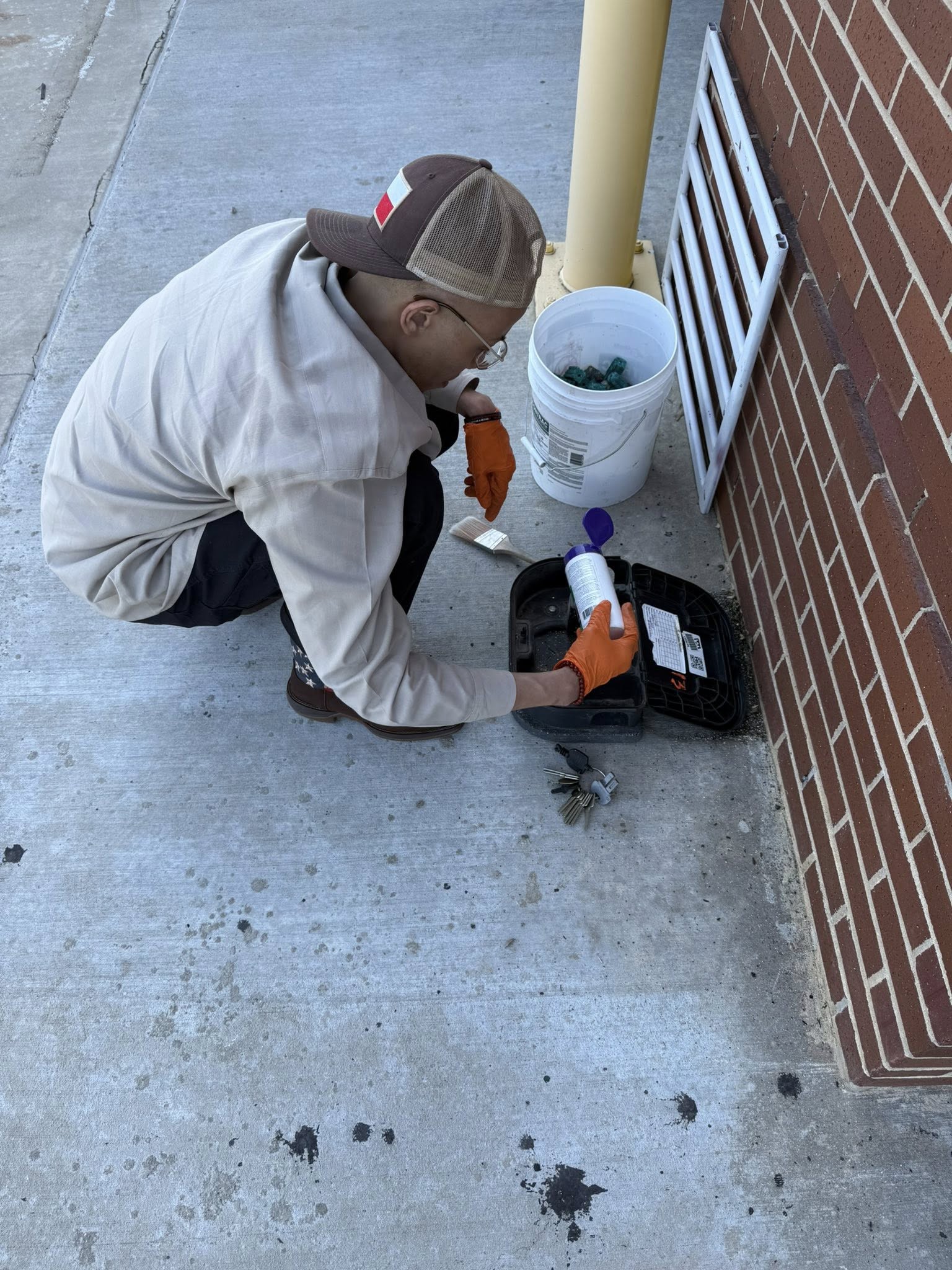
Exterior Service
Treating the exterior of the home to seal out pests and keep the family protected.
Questions, answered
Carpenter Ants FAQ
How can I tell carpenter ants from termites?
Carpenter ants are large with a pinched waist, bent antennae, and unequal wing pairs, and they leave coarse sawdust. Termites are pale, have a straight body, straight antennae, and equal-length wings, and they leave mud tubes — not sawdust.
Do carpenter ants damage homes as fast as termites?
Generally slower, because they tunnel rather than eat the wood and a colony takes years to mature. But left alone in damp framing they can still cause meaningful structural damage, so they shouldn't be ignored.
Get help with carpenter ants: General Pest Control

Texas-proud · Family-owned · Licensed
Got Carpenter Ants? We solve it.
Definity Pest Services treats Carpenter Ants for homes and businesses across the DFW Metroplex — licensed, insured, and guaranteed.
Get your free quote
Tell us what you're seeing. Johnny Lockridge or a Definity tech will call you back fast — usually same day.
Prefer to talk now? Call 469-471-6798.
- Free, no-pressure estimate
- Licensed & insured Texas operator
- Commercial & residential